
Timber Survey
Timber problems generate more unnecessary expenditure than almost any other building defect. Old woodworm holes get quoted for whole-house chemical treatment; superficial wet rot gets described as structural; and genuinely serious dry rot occasionally gets missed entirely. A specialist timber survey exists to sort fact from sales pitch.
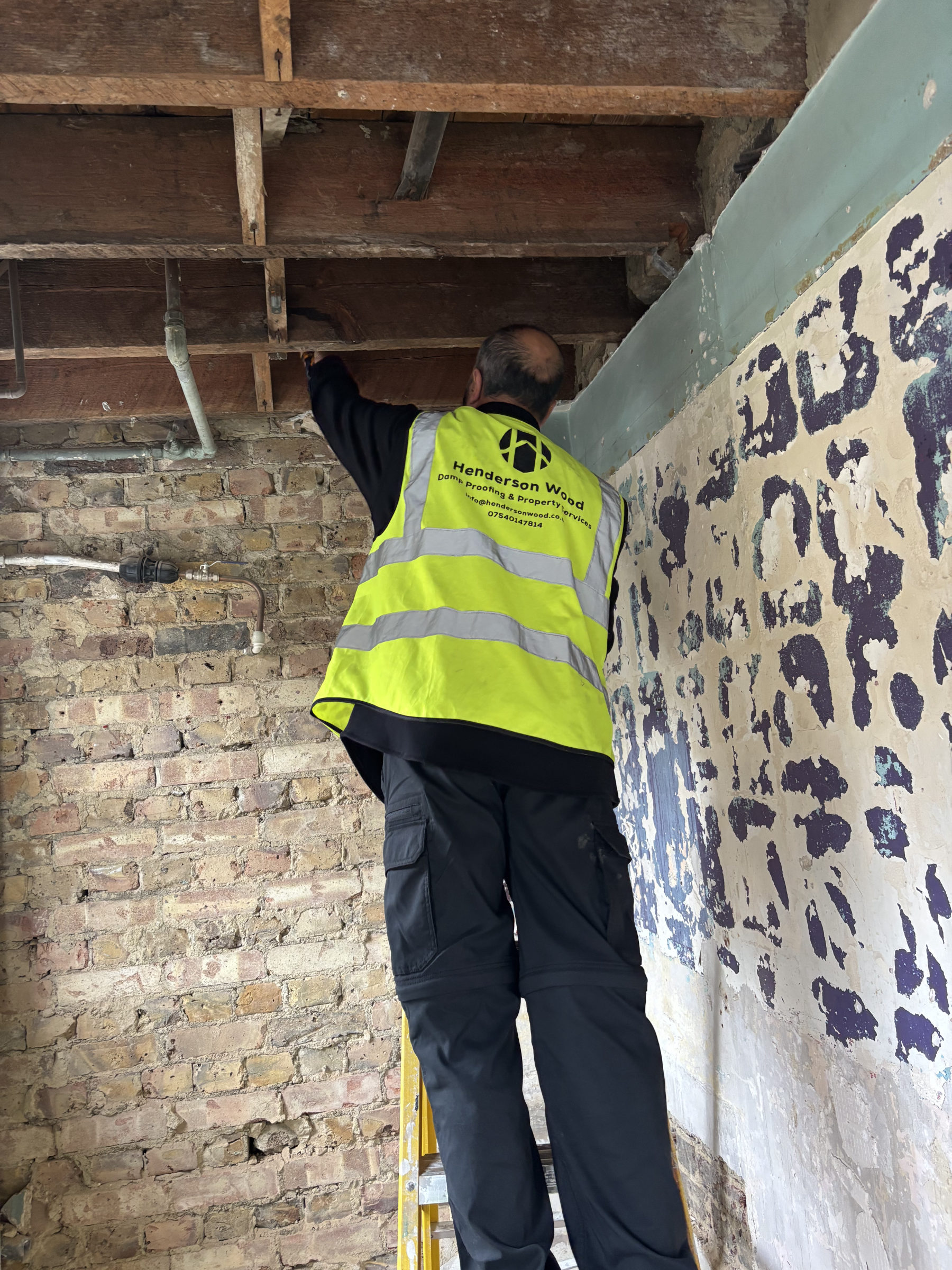
Our surveyors inspect the structural and joinery timbers of your property (floor structures, roof timbers, lintels, frames, and embedded timbers), identifying any fungal decay or insect attack by species, assessing whether it is active, and mapping its true extent. The result is an honest statement of what needs treatment, what needs repair, and what needs nothing at all.
London's period housing relies heavily on timber: suspended ground floors, timber upper floors, and cut timber roofs. Most of it is over a century old and most of it is fine. But the parts that aren't tend to fail in hidden, expensive ways. Knowing which is which is the entire value of this survey.
What the Timber Survey Covers
- Inspection of accessible structural timbers: floor joists, wall plates, rafters, purlins, and lintels
- Sub-floor void and roof space inspection where access exists
- Joinery inspection: windows, doors, frames, staircases, and skirtings
- Fungal decay identification: dry rot (Serpula lacrymans) vs wet rot species, extent, and activity
- Wood-boring insect identification and activity assessment (frass, emergence holes, larval evidence)
- Timber moisture content measurement: the key predictor of future decay risk
Signs You Need This Survey
- Small round holes in timber, especially with fresh bore dust
- Timber that cracks in cuboidal patterns or crumbles when probed
- A mushroom-like smell in floors, cupboards, or cellars
- Fruiting bodies or cotton-wool-like growth on timber or masonry
- Springy or sagging floors
- Frames and skirtings that feel soft or look distorted
Who This Survey Is For
Property owners who have found evidence of rot or woodworm and need to know its real extent; buyers whose main survey flagged timber defects; anyone quoted for timber treatment who wants independent verification before paying; and owners of period property planning refurbishment, where opening up floors and roofs makes a prior timber assessment invaluable.
Our Survey Process
1. Risk-mapped inspection plan
We start where timber decay actually happens: sub-floor voids, joist ends embedded in external walls, roof junctions, bathroom and kitchen floor zones, and anywhere with a damp history.
2. Detailed timber examination
Accessible timbers are visually inspected and probed, with moisture content measured throughout. Deep probing and borescope inspection are used where decay is suspected beneath sound-looking surfaces.
3. Species and activity identification
Decay and insect evidence is identified precisely: dry rot vs wet rot species, and which wood-boring insect left the holes, along with a clear judgement on whether each problem is live or historic. This single distinction drives everything about the correct response.
4. Structural significance assessment
Not all decay matters equally. We assess whether affected timbers are structural, decorative, or sacrificial, and whether repair, reinforcement, or replacement is the proportionate response.
5. Report with treatment honesty
Your report identifies every issue with photographs and moisture data, and gives a straight answer on treatment: what needs professional intervention, what needs a moisture fix and monitoring, and what needs nothing, including where treatment quotes you may have received are unnecessary.
What You Receive
- A specialist timber report with photographic evidence
- Species-level identification of decay fungi and insects
- Activity status for every issue found: live or historic
- Timber moisture content data and its implications
- Structural significance assessment for affected members
- Proportionate remedial recommendations with realistic costs
Why Choose Henderson Wood?
- Independent expertise with no chemical treatment to sell
- Regularly saves clients thousands by ruling out unnecessary treatment
- Catches serious hidden decay before it becomes structural failure
- Precise identification instead of generic 'rot found' reporting
- Deep familiarity with London period construction
- Clear, evidence-based report usable in purchases and disputes
Frequently Asked Questions
How do I know if woodworm is active or historic?
The reliable indicators are fresh frass (pale, clean bore dust), new emergence holes with sharp clean edges, adult beetles or larvae, and timber moisture content high enough to sustain a life cycle. Old dark-edged holes with no frass in dry timber are almost always historic. We assess all of these, because activity status is the central finding of a good timber survey.
Do you sell timber treatment?
No. We are independent surveyors, and our only product is an accurate diagnosis. Where treatment is genuinely needed we specify it and can point you to reputable contractors; where it isn't, we say so plainly, which is frequently the more valuable answer.
What's the difference between dry rot and wet rot?
Wet rot needs persistently wet timber and stays put; fix the moisture and repair the wood and it's resolved. Dry rot can grow through masonry and spread well beyond its starting point, so it requires urgent and more extensive intervention. They demand very different responses, and very different budgets, which is why species identification matters.
Can you check timbers I can't see, like under floors?
We inspect everywhere access permits, including sub-floor voids via hatches and roof spaces. Where timbers are fully concealed, we use moisture profiling of surrounding fabric, borescope inspection where openings exist, and visible-evidence risk assessment, and we tell you honestly where opening up is justified.
How much does a timber survey cost in London?
Pricing depends on property size and how much timber inspection is involved. A flat differs from a four-storey Victorian house. Contact us for a fixed quotation; if you also have damp concerns, the Combined Damp and Timber Survey is usually better value than two separate inspections.
When to Book
- • Woodworm holes or rot discovered in your property
- • A treatment company has quoted and you want verification
- • Buying a period property with timber floors and roof
- • Before refurbishment that opens up floors or roofs
- • Musty smells or springy floors with no visible cause