
Combined Damp and Timber Survey
Damp and timber decay are not separate problems, because one causes the other. Wet rot, dry rot, and most wood-boring insect activity all need moisture to establish. Surveying one without the other tells you half the story: you may learn a wall is damp without discovering it has been quietly rotting the joist ends embedded in it for a decade.
Our combined survey investigates both in a single visit: full moisture diagnosis across the property plus inspection of structural and joinery timbers in floors, roof spaces, and high-risk embedded locations. One surveyor, one visit, one integrated report that connects each timber issue to the moisture source feeding it.
In London's older housing stock, where suspended timber ground floors sit over ventilated (or too often unventilated) voids and joist ends bear into solid external walls, this is the survey that finds the problems that stay hidden until a floor gives way.
What the Combined Damp and Timber Survey Covers
- Complete damp investigation: moisture profiling, damp type identification, and source tracing
- Structural timber inspection: floor joists, sub-floor voids, roof timbers, and lintels where accessible
- Joinery inspection: window frames, door frames, skirtings, and embedded timbers
- Identification of fungal decay species (dry rot vs wet rot) and whether outbreaks are active
- Wood-boring insect identification (common furniture beetle, deathwatch beetle, etc.) and activity assessment
- Sub-floor ventilation adequacy review: the most common root cause of hidden decay
Signs You Need This Survey
- Springy, bouncy, or sloping floors
- A distinctive mushroom-like smell (a classic dry rot indicator)
- Small round holes in timber with fine bore dust (frass)
- Cuboidal cracking or darkening of skirting or floor timbers
- Damp walls in rooms with timber floors
- Blocked or insufficient air bricks around the building
Who This Survey Is For
Owners of period property who want the full picture rather than a partial one; buyers directed to specialist investigation by a Building Survey; landlords with older stock where floor and roof timbers have never been inspected; and anyone who has found decay in one location and needs to know how far it extends. If your property is pre-war with suspended timber floors, this is almost always the right survey to choose over a damp-only inspection.
Our Survey Process
1. Whole-property damp investigation
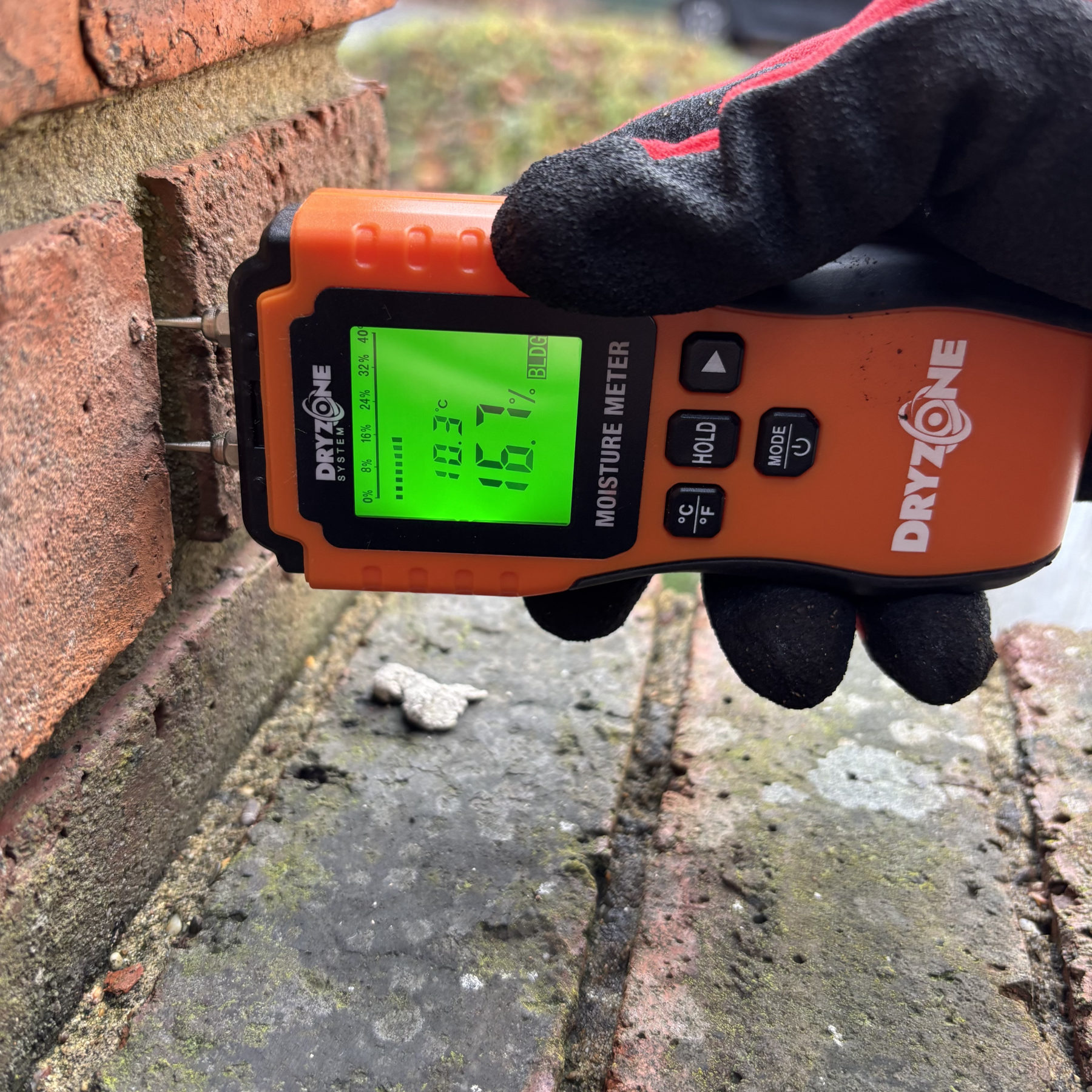
The survey begins with full moisture diagnosis: profiling walls and floors, identifying damp types, and tracing sources, because the moisture map tells us exactly where timber is at risk.
2. Sub-floor and roof space inspection
Where access exists or can be created via hatches, we enter or inspect sub-floor voids and roof spaces, the two locations where serious decay develops unseen. Joist ends, wall plates, and bearing points get particular attention.
3. Decay and infestation identification
Any decay found is identified by species and activity status. The distinction matters enormously: dry rot demands urgent, extensive intervention; historic inactive woodworm may need nothing at all. Misidentification in this area wastes thousands.
4. Cause-and-effect mapping
Every timber problem is linked to the moisture condition causing it. Treating rot without fixing its moisture source guarantees recurrence, so the integrated report makes those connections explicit.
5. Integrated report and remedial strategy
You receive a single report covering damp and timber together: findings, photographs, moisture data, decay identification, and a remedial strategy sequenced correctly: moisture sources first, timber repairs second, cosmetic works last.
What You Receive
- One integrated damp and timber report with photographs and readings
- Species-level identification of any rot or insect attack, with activity status
- Assessment of structural significance for affected timbers
- Sub-floor ventilation assessment and recommendations
- A correctly sequenced remedial strategy with realistic cost guidance
- Clear separation of urgent structural items from routine maintenance
Why Choose Henderson Wood?
- Two specialist investigations in one visit and one fee
- The integrated view catches problems single-scope surveys miss
- Accurate decay identification prevents unnecessary chemical treatment
- Ideal for pre-war London housing with suspended timber floors
- Independent findings with no treatment sales agenda
- Report structured for both immediate action and long-term planning
Frequently Asked Questions
Why combine damp and timber in one survey?
Because timber decay is a moisture problem. Rot and most insect attack only establish in damp wood, so the damp map and the timber inspection inform each other. Combined surveying is also more economical: one visit and one report instead of two.
Can you inspect under my floors?
Where there is an access hatch or one can reasonably be created, yes. Sub-floor voids are a priority area. Where no access exists, we inspect all available evidence (ventilation, moisture readings at floor level, floor condition) and clearly report the risk level and whether creating access is justified.
How serious is dry rot compared to wet rot?
Dry rot (Serpula lacrymans) can spread through masonry and travel well beyond the wet timber where it started, which is why it demands urgent, thorough treatment. Wet rot stays confined to persistently damp timber and is resolved by fixing the moisture source and repairing affected wood. Correct identification, which we provide, is the difference between a proportionate repair and a very expensive one.
Is woodworm always a problem?
No. A large proportion of woodworm evidence in London property is historic and inactive: old flight holes from an infestation that died out decades ago. Blanket chemical treatment of inactive woodworm is a waste of money. We assess activity (fresh frass, new emergence holes, timber moisture content) and only recommend treatment where infestation is live.
What does the combined survey cost?
Pricing depends on property size and access complexity. Contact us for a fixed quotation. It is consistently cheaper than commissioning separate damp and timber surveys, and the integrated findings are more useful than two disconnected reports.
When to Book
- • Buying or owning a pre-war property with timber floors
- • Floors feel springy or smell musty underneath
- • Decay or woodworm found in one area, and you need to know how far it goes
- • A Building Survey recommended specialist damp and timber investigation
- • Before refurbishing a period property
Talk to a Surveyor
Not sure this is the right survey for your situation? Tell us what's happening with the property and we'll recommend the most appropriate (and most economical) option.