
Residential Damp Survey Report
A residential damp survey is the definitive way to find out what is really causing damp in your home. Rather than guessing from a damp patch or a musty smell, our surveyors carry out a systematic moisture investigation of the whole property (walls, floors, ceilings, external envelope, and ventilation) and give you a clear, evidence-based diagnosis in plain English.
Damp problems in London homes are rarely what they first appear to be. A stain at skirting level might be rising damp, but it is just as often a leaking pipe, bridged damp proof course, or condensation caused by poor ventilation. Misdiagnosis leads to expensive treatments that don't fix the underlying problem. Our RICS-standard methodology means the diagnosis comes first, and any recommendations are based on evidence, not sales targets.
We survey homes across all London boroughs, from Victorian terraces in Lewisham and Hackney to post-war flats and modern new builds. Every survey is carried out by a qualified damp specialist and results in a comprehensive written report you can rely on, whether you're fixing your own home, managing a tenancy, or responding to a landlord or council enquiry.
What the Residential Damp Survey Report Covers
- Internal inspection of all accessible rooms, including moisture profiling of walls at multiple heights
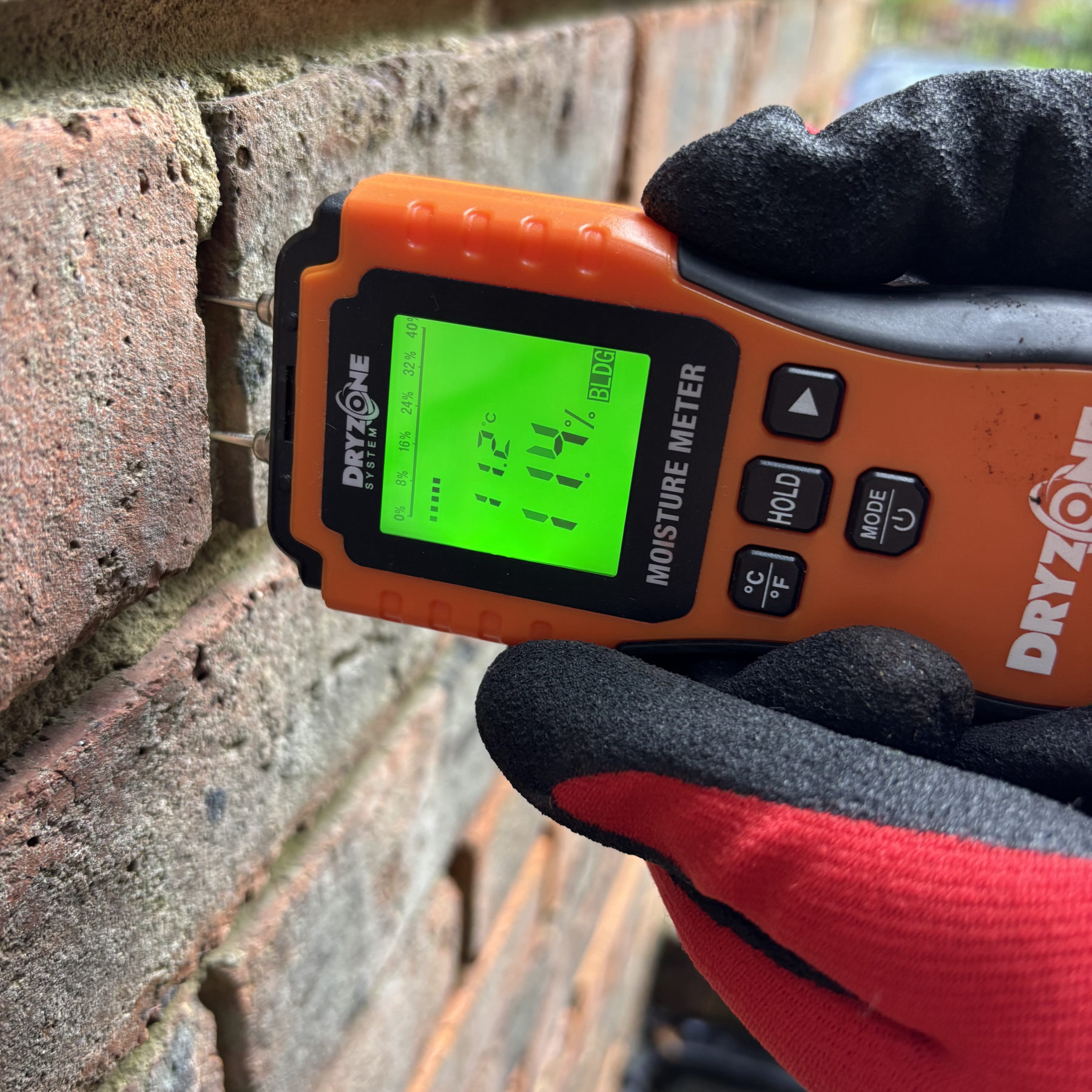
- Electronic moisture meter readings and surface temperature measurements throughout the property
- Inspection of external elements: pointing, render, ground levels, damp proof course position, gutters and downpipes
- Assessment of ventilation provision, heating patterns, and humidity levels room by room
- Identification of the damp type: rising damp, penetrating damp, condensation, or plumbing/leak-related moisture
- Review of any previous damp proofing works and their current condition
Signs You Need This Survey
- Damp patches, tide marks, or staining on internal walls
- Peeling wallpaper, blown plaster, or salt deposits (efflorescence)
- Black mould around windows, corners, or behind furniture
- A persistent musty smell in one or more rooms
- Rotting skirting boards or lifting floor coverings
- Condensation streaming on windows during colder months
Who This Survey Is For
This survey is designed for homeowners who want a definitive answer about a damp problem, landlords who need professional documentation of property condition (including for Awaab's Law compliance), and tenants who need independent evidence of damp or mould issues. It's also the right choice if a builder or damp proofing company has quoted for works and you want an independent second opinion before spending money.
Our Survey Process
1. Booking and pre-survey questions
When you book, we ask a few targeted questions about the property: age, construction type, symptoms you've noticed, and any history of damp treatment. This lets the surveyor arrive prepared with the right equipment and background knowledge.
2. Full internal moisture investigation
The surveyor inspects every accessible room, taking calibrated moisture meter readings at multiple wall heights, checking floors and ceilings, and profiling moisture distribution to distinguish rising damp from condensation and penetrating damp. Thermal imaging is used where appropriate to trace hidden moisture paths.
3. External envelope inspection
Most damp problems start outside. We inspect ground levels, damp proof course position, pointing, render condition, roof line, gutters, and downpipes to identify external defects that are driving moisture into the building.
4. Environmental and ventilation assessment
Condensation is the most common cause of damp and mould in London housing. We measure relative humidity and temperature in key rooms, and assess extraction and ventilation provision in kitchens and bathrooms, to establish whether lifestyle and ventilation factors are contributing.
5. Written report within 2-3 working days
You receive a full written report with photographs, moisture readings, a clear diagnosis of each affected area, and prioritised recommendations, including realistic guidance on what needs professional treatment and what you can resolve yourself.
What You Receive
- A RICS-standard written report, typically 15-25 pages, delivered in 2-3 working days
- Photographic evidence of all defects and affected areas
- Moisture readings and their interpretation, room by room
- A clear diagnosis for each damp issue found, not a generic label
- Prioritised remedial recommendations with indicative guidance on costs
- Documentation suitable for landlord compliance records, insurance, or council correspondence
Why Choose Henderson Wood?
- RICS-certified survey methodology: diagnosis first, treatment second
- Fixed price from £300 inc VAT with no hidden extras
- Independent advice: we have no incentive to sell you unnecessary damp proofing
- Fast 2-3 working day report turnaround
- Surveyors experienced with London's Victorian, Edwardian, and modern housing stock
- Reports accepted by landlords, letting agents, councils, and insurers
Frequently Asked Questions
How much does a residential damp survey cost in London?
Our residential damp surveys start from £300 inc VAT for a standard property, with pricing based on the size of the home. That price includes the full on-site investigation and the written report. There are no hidden extras or follow-up sales pressure.
How long does a damp survey take?
Most residential damp surveys take between one and two hours on site, depending on the size of the property and the number of affected areas. Your written report is then delivered within 2-3 working days.
What is a RICS-certified damp survey?
A RICS-standard survey follows a recognised investigative process: moisture profiling, defect identification, and evidence-based diagnosis before any treatment is recommended. It is the standard that councils, landlords, and industry professionals expect.
Is this survey suitable for Awaab's Law compliance?
Yes. Under Awaab's Law, landlords must investigate reported damp and mould hazards within set timeframes. Our report provides the professional investigation and written documentation landlords need to demonstrate compliance, including diagnosis, severity assessment, and recommended remedial action.
Do you sell damp proofing treatments after the survey?
No, and that's the point. We are independent surveyors. Our report tells you what is actually wrong and what genuinely needs doing. If remedial work is required we can recommend trusted contractors, but we have no financial interest in the treatment, which keeps the diagnosis honest.
What's the difference between this and a free damp survey from a damp proofing company?
Free surveys are usually sales visits: the company earns money by selling treatment, so the 'survey' tends to find problems that need their products. An independent paid survey costs money upfront but regularly saves thousands by ruling out unnecessary chemical damp proof courses and identifying the true cause, which is often a simple external defect or ventilation issue.
When to Book
- • Damp patches or mould have appeared in your home
- • A damp proofing company has quoted and you want a second opinion
- • You're a landlord responding to a tenant damp report
- • A musty smell won't go away
- • Plaster or paintwork is failing repeatedly in the same spot
- • You want damp documented before or after building work