
Water Damage Survey
After a leak or flood, the visible damage is rarely the whole story. Water travels: under floor coverings, through wall cavities, along joists, and into materials that look dry on the surface within days while remaining saturated inside for months. A water damage survey maps where the moisture actually went, before hidden saturation turns into rot, mould, and a second round of damage.
We carry out independent moisture mapping of the affected areas and everywhere water could plausibly have reached, using calibrated meters and thermal imaging. The result is an objective record of the true extent of damage: essential for insurance claims, drying contractors, and your own peace of mind that reinstatement isn't sealing wet materials behind new finishes.
We also validate drying. Reinstatement should only begin when fabric has genuinely dried to target levels. Redecorating over damp walls is one of the most common and expensive mistakes in water damage recovery.
What the Water Damage Survey Covers
- Moisture mapping of all affected rooms and adjacent areas water may have tracked to
- Thermal imaging survey to trace hidden moisture paths behind finishes
- Sub-floor, void, and cavity moisture assessment where accessible
- Identification of the water source where it remains uncertain
- Secondary damage risk assessment: mould, timber decay, and finish failure
- Drying validation: readings against dry standards before reinstatement
Signs You Need This Survey
- A recent leak, overflow, appliance failure, or flood event
- Staining that keeps growing or returning after a repaired leak
- Lifting floor finishes or cupping floorboards
- A damp or musty smell following an escape of water
- Insurer or loss adjuster requesting evidence of extent
- Uncertainty whether drying is complete before redecorating
Who This Survey Is For
Homeowners and landlords dealing with an escape of water, storm ingress, or flood, particularly where an insurance claim is involved and the extent of damage is disputed or unclear; property managers coordinating drying and reinstatement across multiple flats after a leak from above; and anyone about to redecorate or refit after water damage who wants confirmation the structure is actually dry.
Our Survey Process
1. Incident review
We establish what happened, when, and what has been done since: the source, the duration of the escape, first-response actions, and any drying already in progress, so we target the investigation correctly.
2. Full moisture mapping
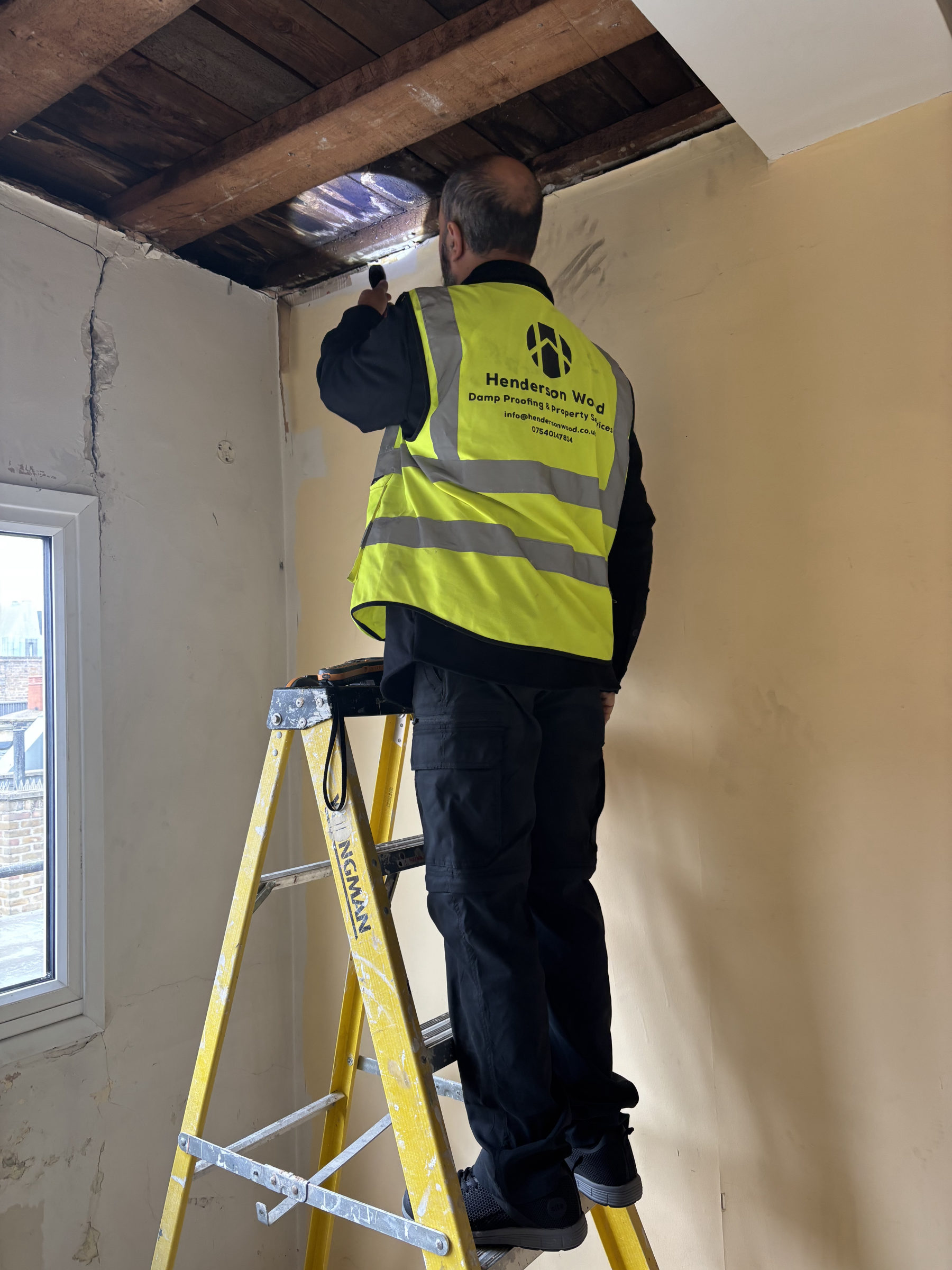
Affected and adjacent areas are surveyed with calibrated moisture meters at multiple depths, supported by thermal imaging to reveal moisture paths behind plaster, under floors, and along concealed routes.
3. Hidden damage investigation
Voids, cavities, and layered constructions are assessed: the places where trapped moisture causes the most expensive downstream damage. Where opening up is justified, we specify exactly where and why.
4. Documentation for claim and contractors
Everything is recorded with photographs and quantified readings, producing an independent evidence base for insurers, loss adjusters, and reinstatement contractors, including damage that first responders missed.
5. Drying validation and reinstatement sign-off
Where drying is underway, we measure progress against dry standards and advise when reinstatement can safely begin, and we return, if needed, to certify final dryness before finishes go back on.
What You Receive
- A full moisture map of the affected property with quantified readings
- Thermal imaging evidence of hidden moisture paths
- Independent documentation of the true extent of damage for your claim
- Secondary risk assessment for mould and timber decay
- Clear guidance on what must dry, be removed, or be treated before reinstatement
- Drying validation against recognised dry standards
Why Choose Henderson Wood?
- Independent of insurers and contractors: evidence you control
- Finds the hidden saturation that causes second-round damage
- Prevents redecorating over wet fabric
- Strengthens and accelerates insurance claims with objective data
- Thermal imaging and calibrated measurement, not guesswork
- Rapid response: early mapping preserves the best evidence
Frequently Asked Questions
When should I get a water damage survey, immediately or after drying?
Ideally both, but the first survey should be early: moisture mapping soon after the event captures the true extent while the evidence is strongest, which matters for insurance and for scoping drying correctly. A follow-up validates dryness before reinstatement. If you can only afford one visit, early is usually more valuable.
Will insurers accept your report?
Yes. Quantified moisture readings, thermal images, and photographic documentation are exactly the evidence class insurers and loss adjusters work with. An independent survey is particularly valuable where you feel the adjuster's scope understates the damage.
The wall looks dry now. Could it still be wet inside?
Very commonly, yes. Plaster surfaces can dry to the touch within days while the masonry behind holds substantial moisture for months. Deep and surface readings differ dramatically in these cases, which is why decorating decisions should be based on measurement, not appearance.
How long does a property take to dry after a flood or major leak?
Anywhere from a few weeks to over a year, depending on construction, saturation depth, and drying conditions. Solid masonry walls dry far slower than modern lightweight construction. Our validation readings tell you where your property actually is on that curve, rather than relying on rules of thumb.
Can you tell where the water came from?
Usually. Moisture distribution patterns, tracking paths, and thermal imaging generally point clearly to the source: plumbing, appliance, roof, or external ingress. Where the source is genuinely ambiguous, we'll say so and specify the targeted investigation that will settle it.
When to Book
- • As soon as possible after a leak, flood, or escape of water
- • Before agreeing a claim settlement scope with an insurer
- • Before reinstatement or redecoration begins
- • When staining returns after a 'fixed' leak
- • When a flat below or above yours has been affected